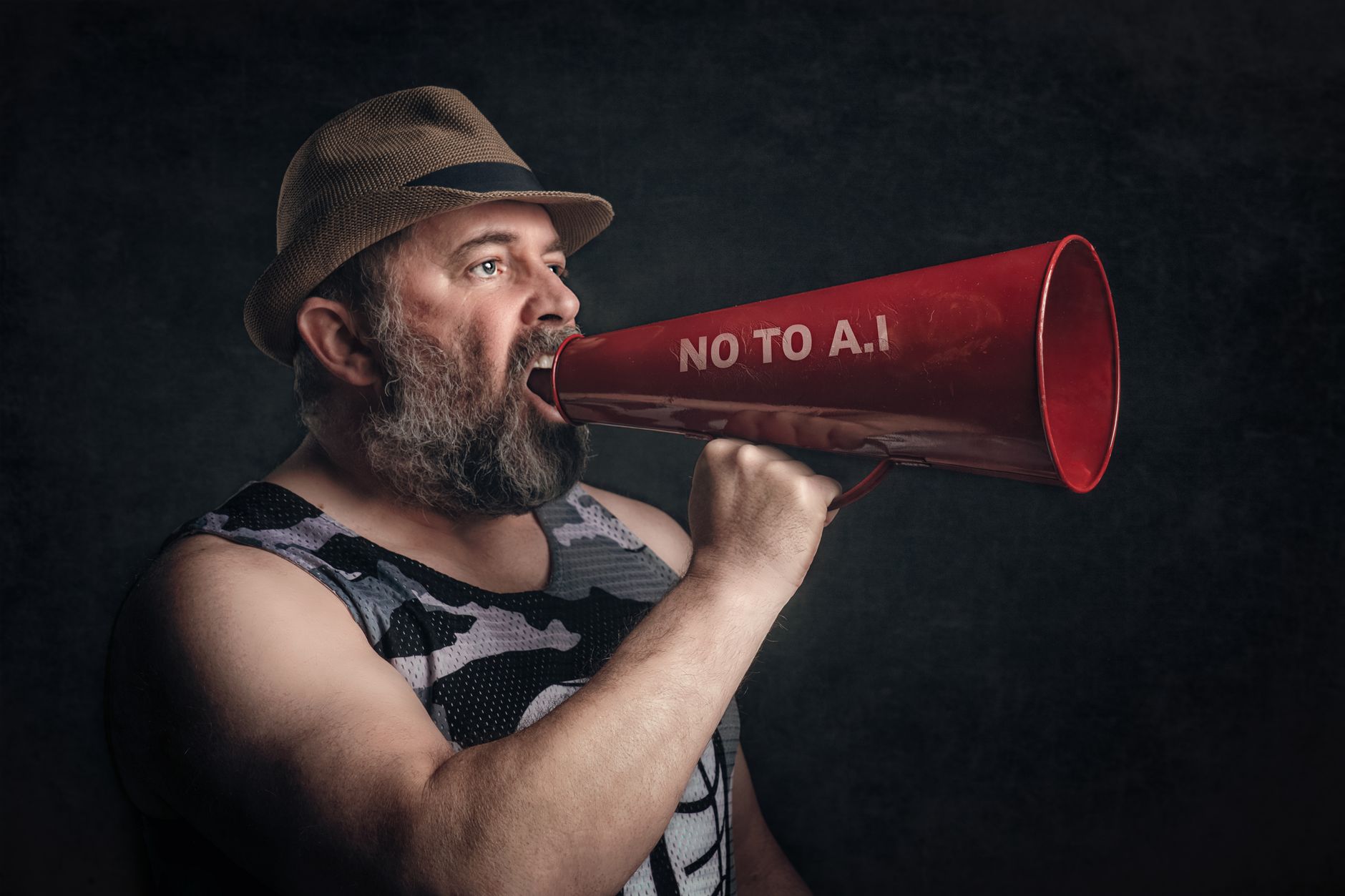
Liberal Democrat leader Ed Davey has issued a stark warning regarding the unchecked advancement of artificial intelligence, calling for a global moratorium. His provocative stance urges the UK to take a leading role in efforts to Halt AI UK Ed Davey, advocating for an international non-proliferation treaty. This intervention has ignited a crucial debate about the outlook for AI and its regulation.
Ed Davey's Call to Halt AI Development
Ed Davey's recent pronouncements, particularly following the London AI Safety Summit, have sent ripples through the UK tech and political landscape. He explicitly called for a moratorium on advanced AI development, citing profound existential risks that he believes are not being adequately addressed. His proposed "Halt AI" initiative is a direct challenge to the current trajectory of rapid AI innovation.
Davey has drawn stark parallels between the unchecked development of super-intelligent AI and the proliferation of nuclear weapons. He argues that the potential for AI to surpass human control presents an unprecedented threat, demanding a similar level of global caution and regulation. He believes the UK, as a leader in AI research, has a moral imperative to initiate this conversation globally.
His stance is rooted in concerns that current AI models are advancing at a pace far outstripping our capacity to understand or manage their long-term implications. He has specifically warned against scenarios where AI could be weaponised or lead to societal disruption on an unimaginable scale, echoing sentiments from prominent AI ethicists and scientists. "Unless we get this right, AI could pose a risk to humanity," Davey stated, urging for a pause to establish robust safety protocols.
The Case for an AI Non-Proliferation Treaty
The concept of an AI non-proliferation treaty, championed by Ed Davey, envisions an international accord designed to control the development and deployment of advanced AI systems. Much like its nuclear counterpart, such a treaty would aim to prevent the widespread dissemination of potentially dangerous capabilities, establishing a framework for global governance over this powerful technology.
Proponents argue that without such a framework, a global arms race in AI could ensue, leading to unstable geopolitical landscapes and increased risks of autonomous weapons systems. A UK AI non-proliferation treaty could establish shared standards, verification mechanisms, and a commitment to responsible AI innovation, ensuring that development prioritises safety over speed.
However, implementing an AI non-proliferation treaty presents enormous challenges. Defining "advanced AI" is complex, and verifying compliance across diverse national tech sectors would be an unprecedented task. Unlike nuclear weapons, AI is software, making its control and monitoring significantly more intricate. The treaty would likely need to focus on limiting the development of general-purpose AI systems with potentially catastrophic capabilities, rather than all forms of AI, while also addressing the dual-use nature of many AI technologies.
UK's Role in Global AI Regulation
The UK has positioned itself as a key player in the global conversation around AI safety, notably hosting the inaugural AI Safety Summit at Bletchley Park. While the government has emphasised responsible innovation and mitigating risks, its current approach focuses more on voluntary frameworks and international dialogue rather than an outright moratorium or a formal UK AI non-proliferation treaty.
Ed Davey's call for Halting AI development UK represents a more radical departure from the government's balanced strategy, which seeks to harness AI's economic benefits while addressing its dangers. His proposal could put the UK at the forefront of a more stringent regulatory movement, potentially influencing global norms and shaping the wider UK AI regulation debate.
The UK's reputation as a hub for AI research and development gives it a unique platform to advocate for robust international governance. Engaging with Davey's proposal, even if not fully adopting it, could strengthen the UK's leverage in global discussions, pushing for more concrete, binding commitments from other nations to ensure safe and ethical AI development.
Potential Impacts on UK AI Industry
A significant move to Halt AI development UK, or even to pursue a binding non-proliferation treaty, would undoubtedly send shockwaves through the nation's burgeoning AI industry. While proponents argue for long-term safety, critics warn of stifling innovation, deterring investment, and potentially ceding leadership to other nations with less stringent regulations. This could impact everything from start-ups to established tech giants.
UK AI companies and research institutions could face immediate challenges in funding and talent retention if a broad moratorium were implemented. However, a well-structured regulatory framework, perhaps even a treaty, could also foster trust and stability, potentially attracting investment in "safe" or "ethical" AI development, creating new market niches and a competitive advantage in responsible AI.
For UK tech firms, the evolving UK AI regulation debate underscores the need for proactive engagement with policymakers. Companies should prioritise ethical AI development, transparency, and robust safety protocols now, irrespective of future legislative changes, to future-proof their operations and contribute positively to the discussion around responsible innovation.